
On Friday 11 April 2025, I had the honour of being invited to witness the Nishaan Sahib Sewa ahead of the annual Vaisakhi celebrations at Guru Nanak Darbar Gurdwara in Gravesend – the largest Gurdwara in Europe, and one of the largest outside of India.
As someone who works locally, I was aware that this sacred ceremony involved the large flagpole outside the Gurdwara, but I had no idea just how emotional, thought-provoking, and humbling the experience would turn out to be.
For those unfamiliar, the Nishaan Sahib is the holy triangular flag of Sikhism – a powerful symbol of Sikh identity, philosophy, and pride. You’ll see it flying high at every Gurdwara, guiding people to these spiritual sanctuaries. The ceremony I was about to observe was more than just maintenance – it was an act of Sewa.
Sewa, meaning “selfless service,” is a core principle in Sikhism. It’s about helping others without expectation or personal gain – a true way of life for many Sikhs, carried out daily in various forms. In this context, Sewa is not only a service to the community but a spiritual offering to Waheguru, the divine.

I was told to arrive by 11:00am, just after the morning prayer. By 11:05, the congregation began to gather outside around the flagpole – an impressive 30 metres tall. As the granthi (a ceremonial reader) processed out of the Gurdwara reciting prayers, stewards began to hydraulically lower the great flagpole – a process that took around 15 minutes and felt reverent in itself.

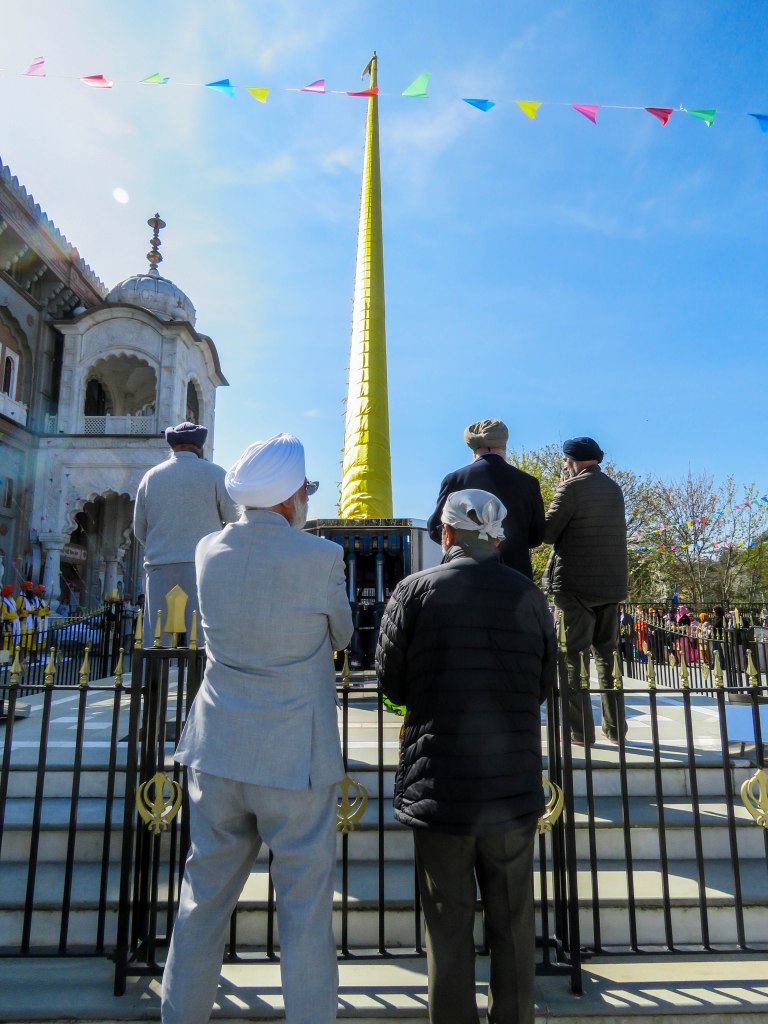
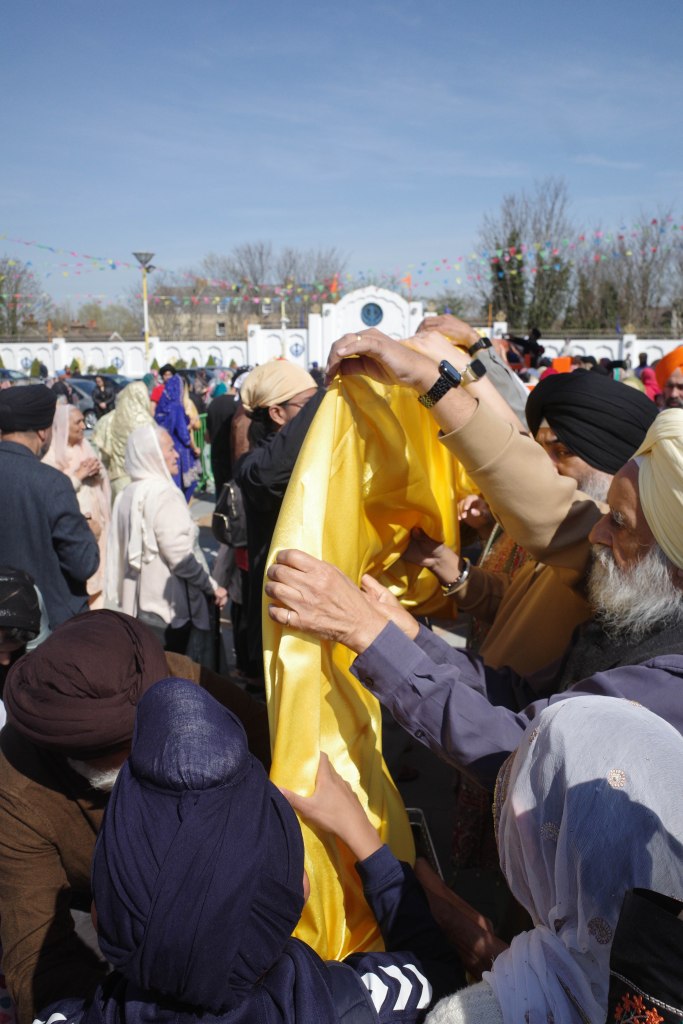
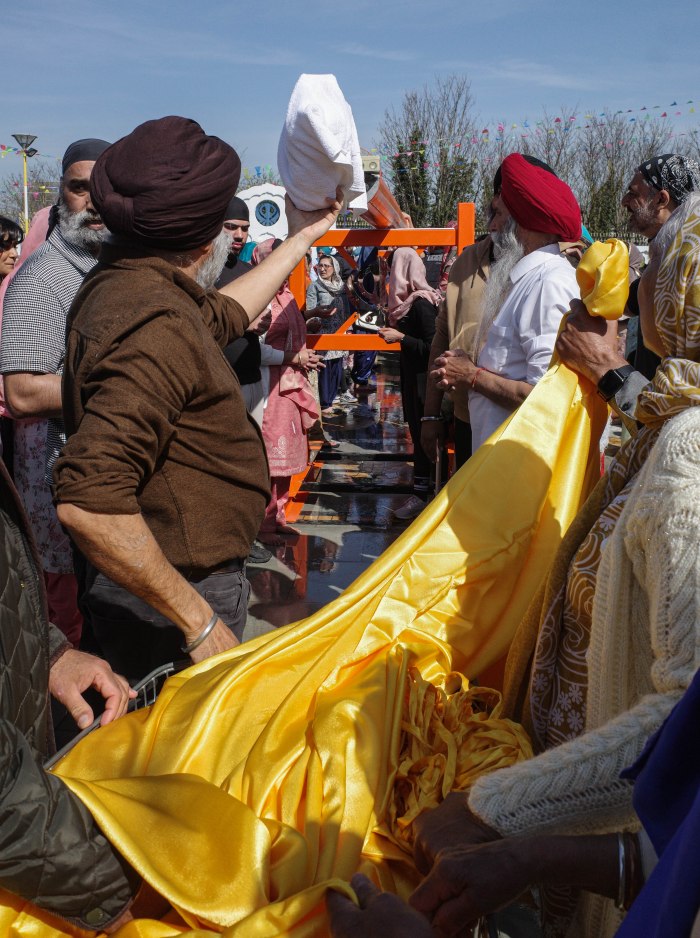
Once the flagpole was resting securely on its custom-designed supports and stairway, the Sewa truly began. The silk sheath (chola) that dresses the flagpole was respectfully removed and placed into a trolley to be washed and reused. Men and women from the community worked side-by-side with gentle care and focus – a beautiful representation of unity and devotion.


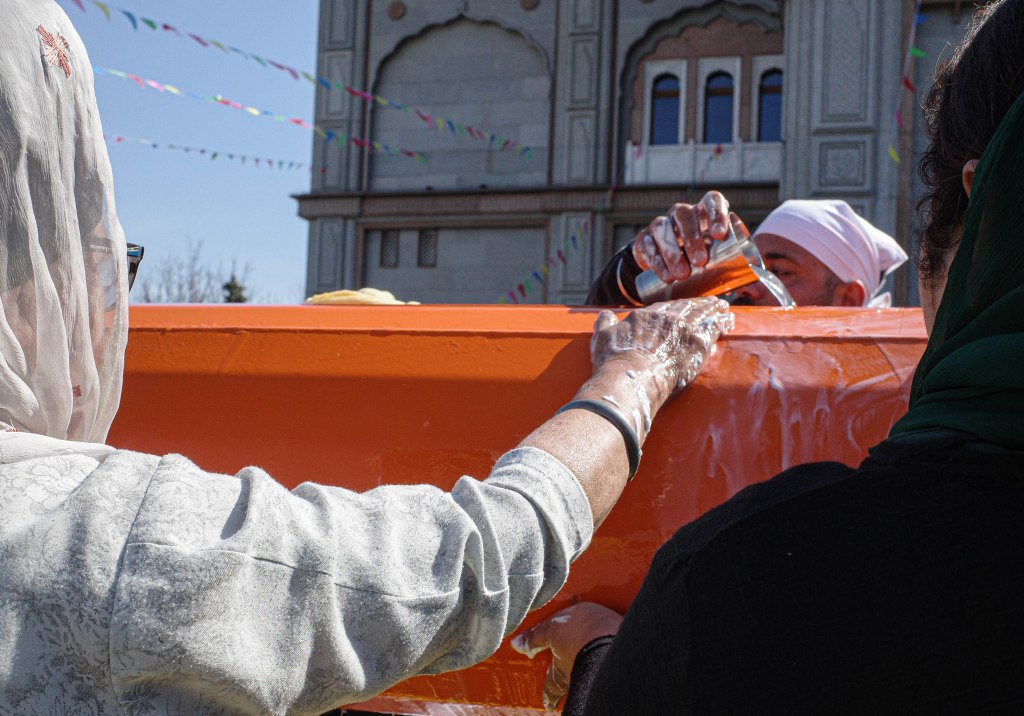
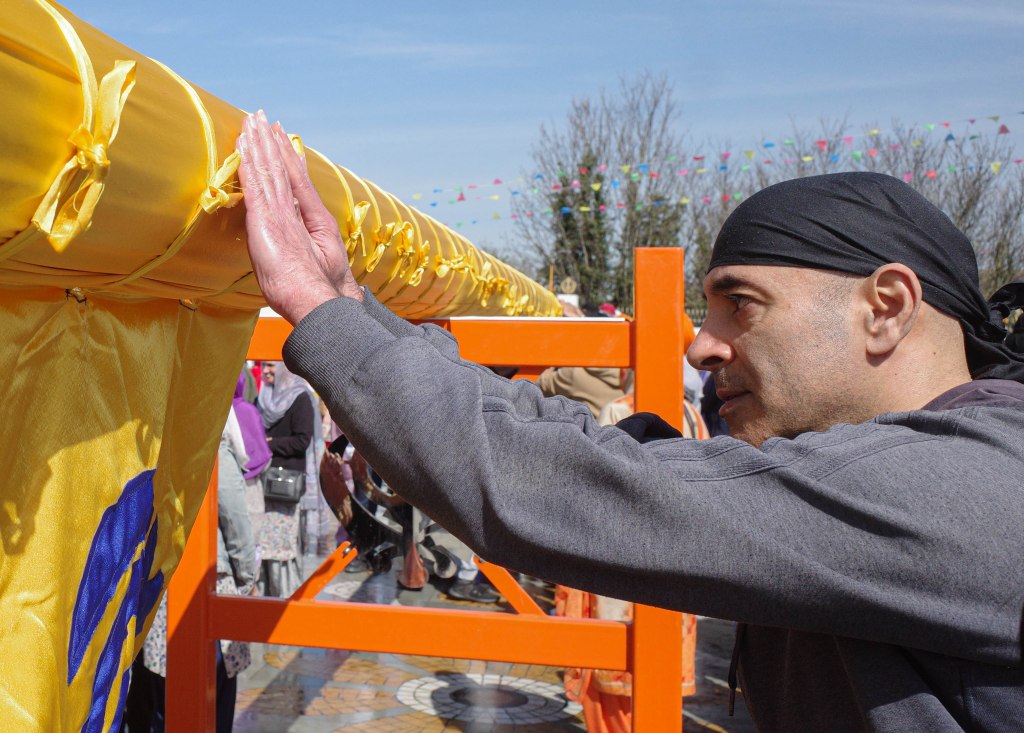
What came next was completely unexpected and incredibly moving. Stewards brought out buckets filled with a mixture of water and yoghurt, and the community began to wash the flagpole with their bare hands – all while others chanted prayers and verses around them. This symbolic cleansing was done with such purpose and reverence, it was impossible not to feel moved by the collective spirit and energy of those present.


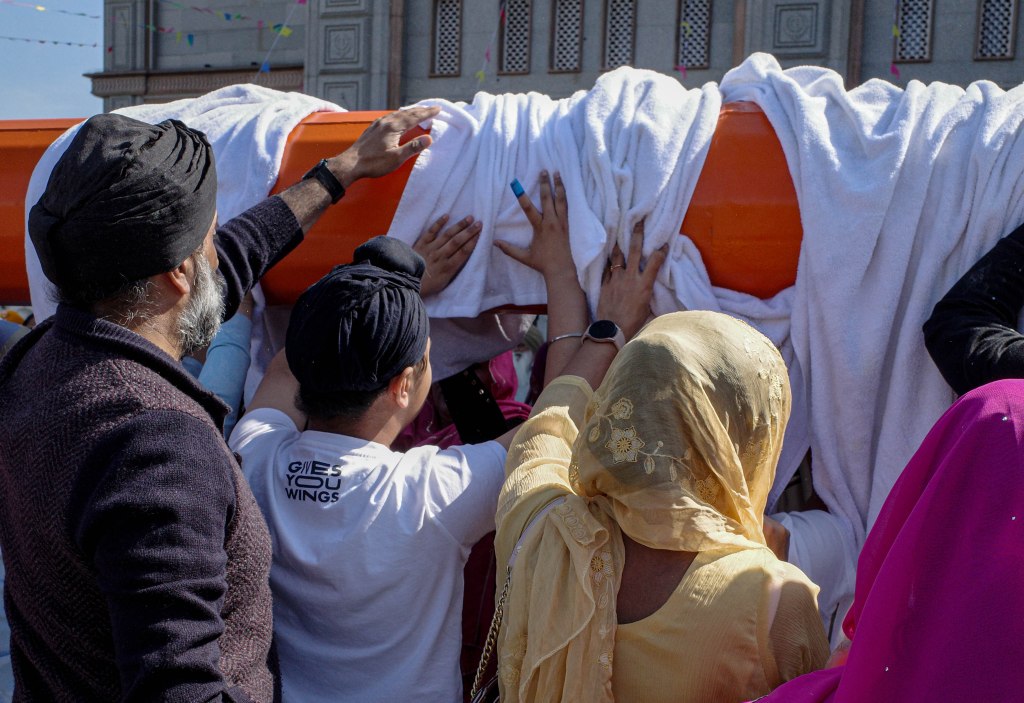
After the cleansing, the pole was carefully rinsed and dried with white towels, again by members of the community. Then, from another trolley emerged a new yellow silk chola, which was meticulously wrapped around the now purified flagpole. Starting from the top, where the Khanda (the Sikh emblem) sits, the chola was dressed with great care.


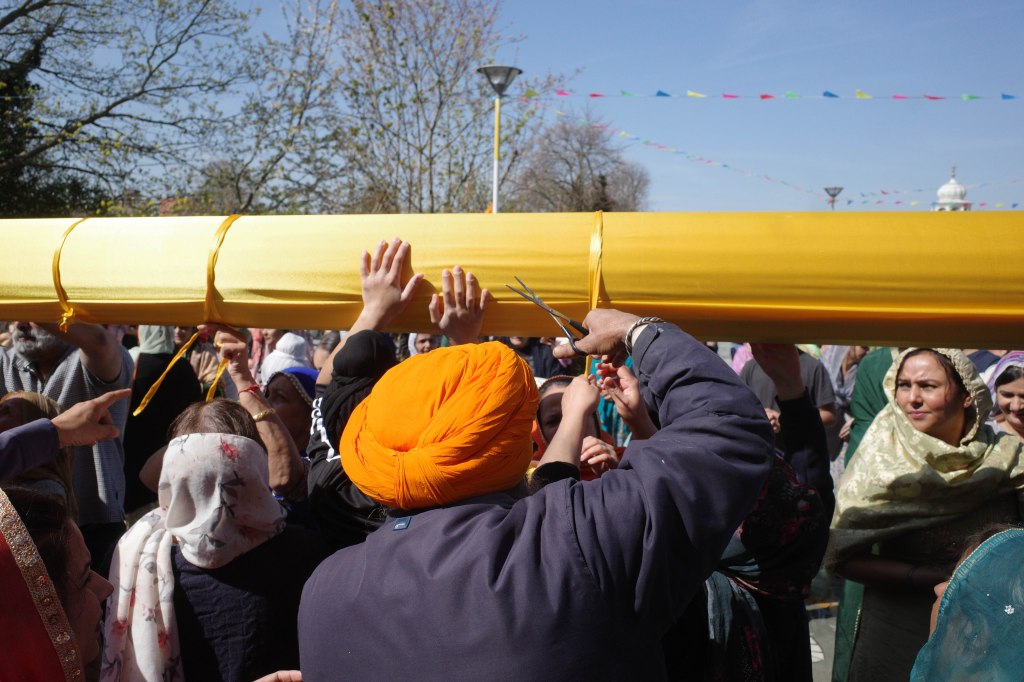
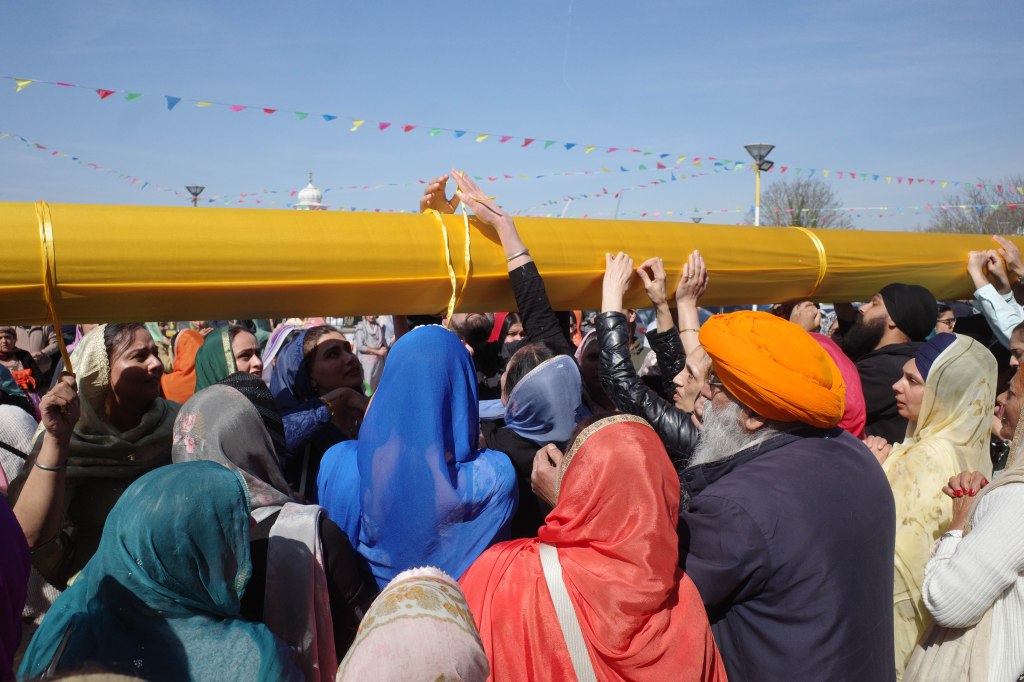
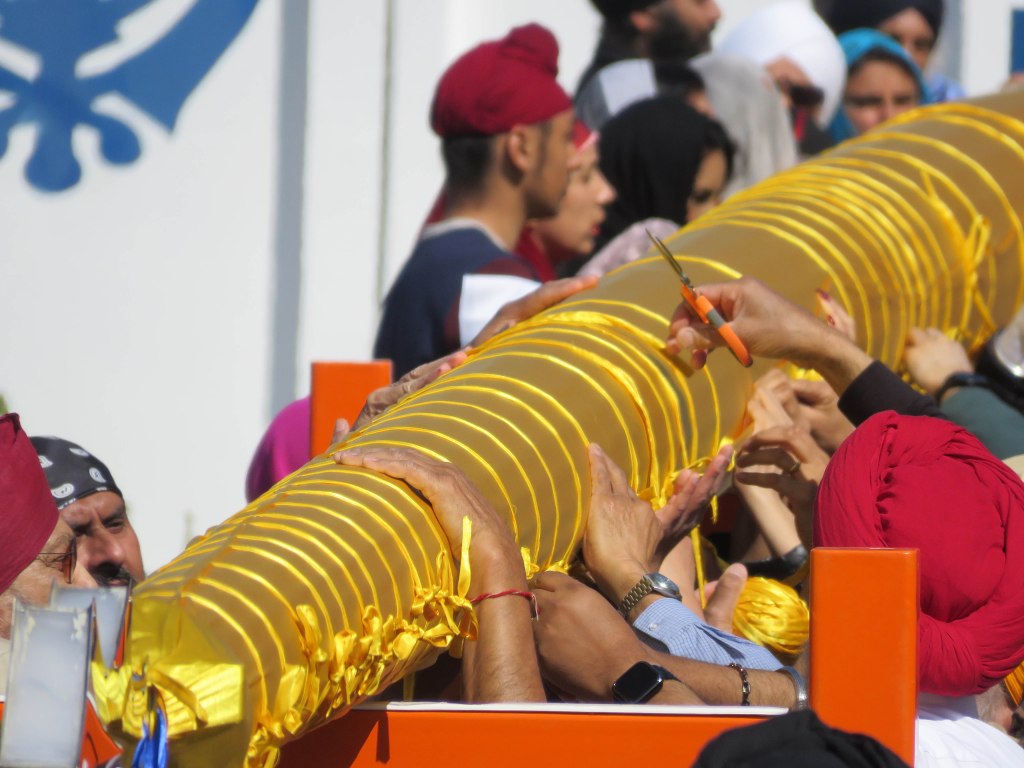
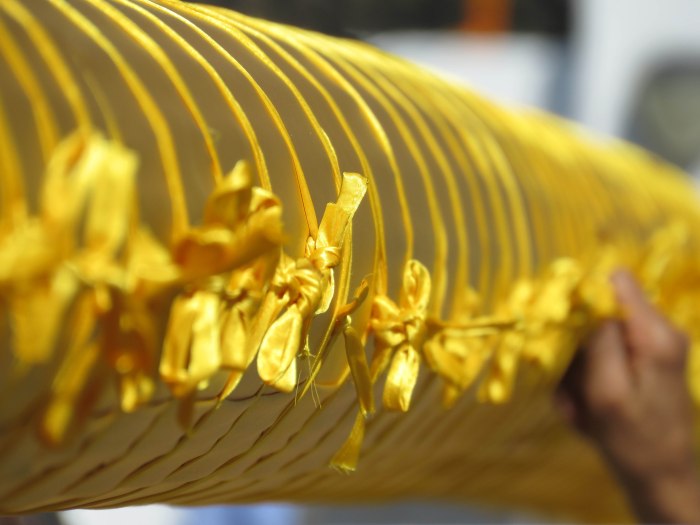
Next came lengths of silk ribbon, used to tie the chola in place. This too was performed with precision – each length measured to suit the pole’s girth and each bow tied neatly on the same side, symbolising respect, consistency, and beauty in tradition.


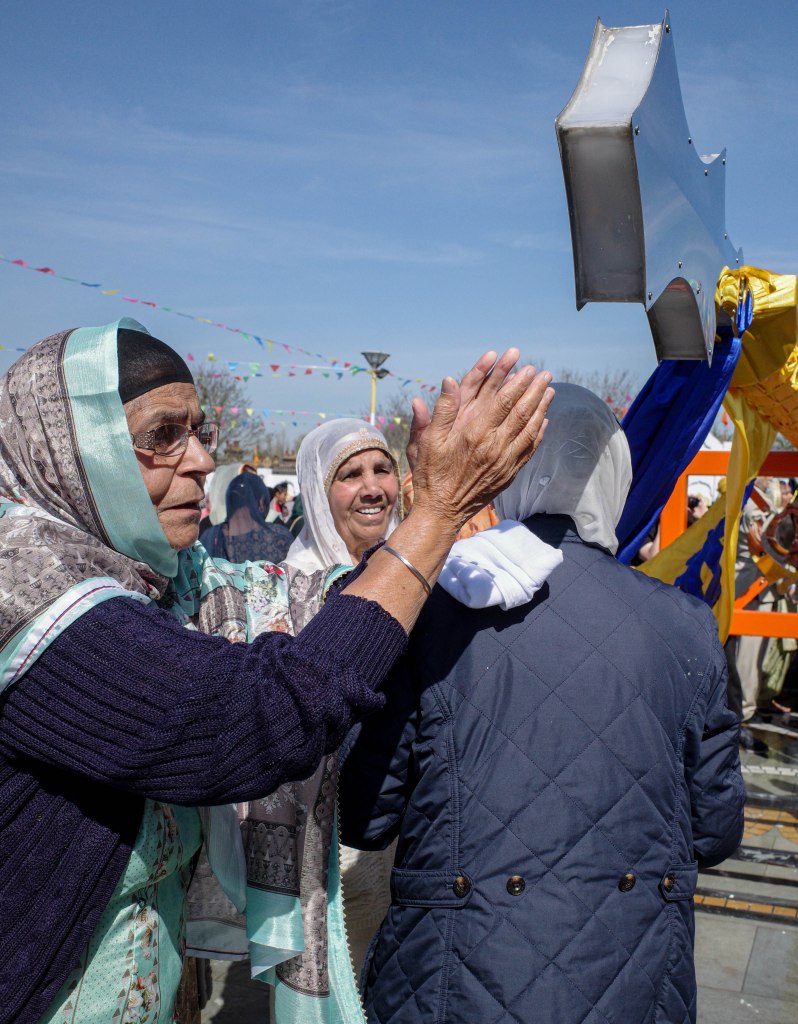
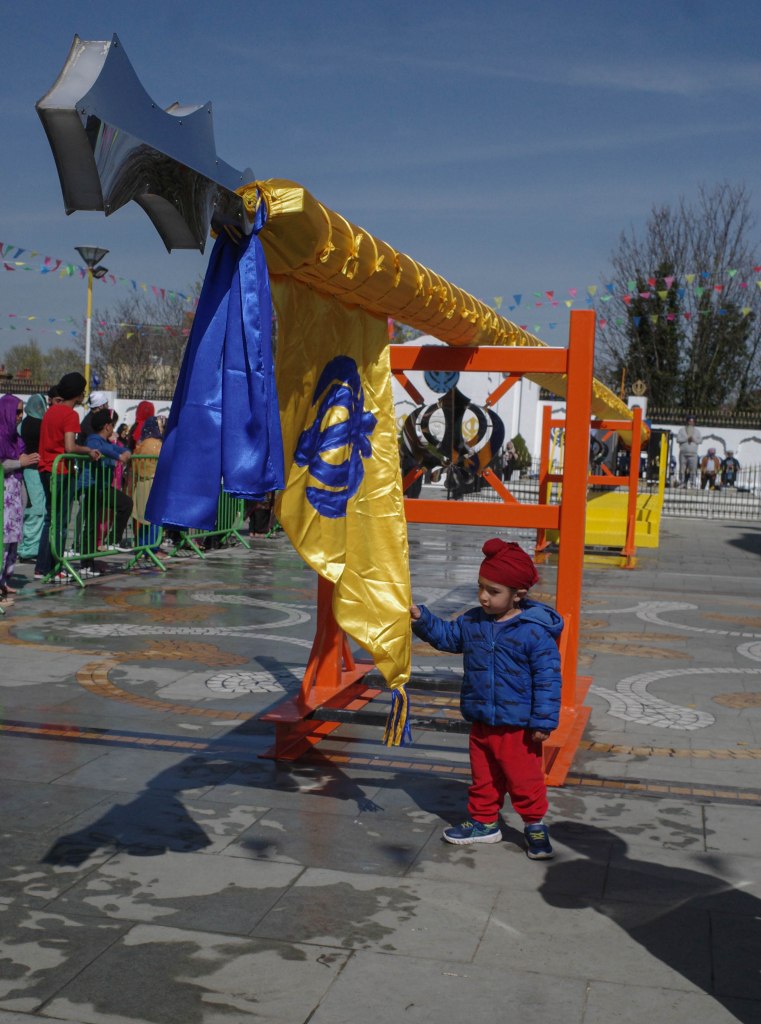
Finally, as the entire community looked on in celebration, the hydraulics were activated once again and the newly dressed Nishaan Sahib was elevated back to its full height – standing proud and radiant, ready to welcome tens of thousands of visitors for the Vaisakhi weekend.
This ceremony takes place twice a year in Gravesend – once for Vaisakhi in April and again in early November to celebrate Guru Nanak’s birthday. To witness it was a privilege, a lesson in humility, and a reminder of the power of collective faith, service, and unity.
If you ever get the chance to attend, I wholeheartedly recommend it – not just for what you’ll see, but for what you’ll feel.
 Photography By MrG